Modular decomposition
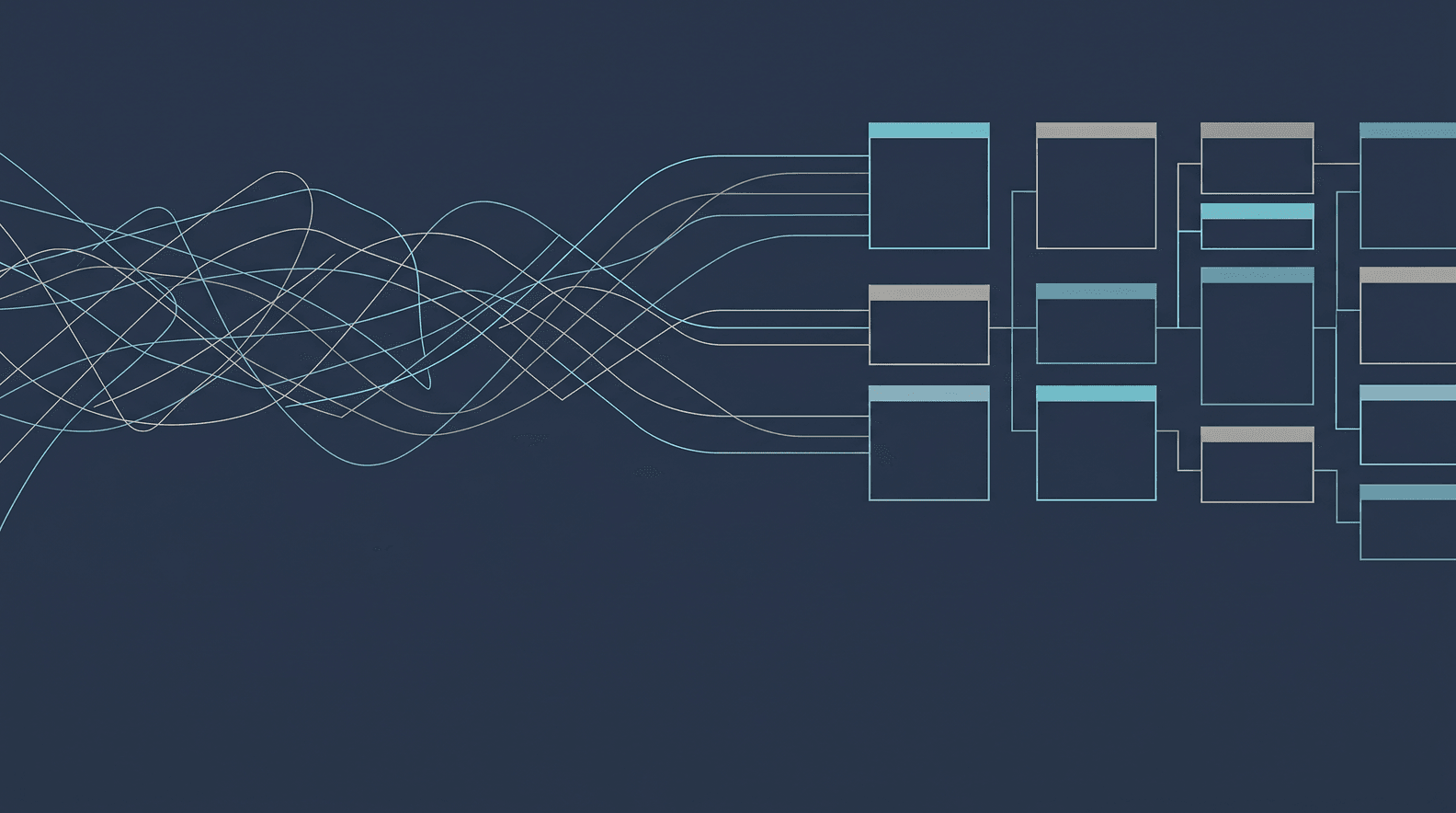
Complex problems get broken down so each module can be built, tested, and perfected on its own. Well-designed interfaces reduce the cost of every future change — the system grows without breaking.
See it in practice →Your product was built fast — with Claude Code, Cursor, or other AI tools. Now you have paying customers, or your first funding round is here, and every new feature feels like a risk. I secure the architecture before it breaks: modular structure, test and regression coverage, full source code handover.
Your funding round is approaching. Your product was built with AI tools — fast, bold, functional. The early euphoria has worn off. The first cracks are showing: a feature nobody wants to touch. A release that takes longer than it should.
Now the ground is shaking. Every new feature breaks another. Releases feel like a gamble. No one on the team dares touch certain parts of the code anymore. Young teams know the upside of AI-generated code — the downside, usually not yet.
An architecture that holds. Missing pieces get retrofitted where they're needed: modular structure, automated tests, clear interfaces. No rewrite. Diagnostic first, then a targeted rebuild.
The funding round is secured. Changes become simple again. Every bug surfaces immediately, before it becomes a problem. The system grows with you — from 5 to 5,000 users, without breaking. The team can focus on what matters: new features, happy customers, instead of dreading the next release. The foundation holds. The idea can grow.
Get clarity, no strings attached — a 15-minute call.
Complex problems get broken down so each module can be built, tested, and perfected on its own. Well-designed interfaces reduce the cost of every future change — the system grows without breaking.
See it in practice →The point where fast-built, often AI-generated code starts to rot. Here it stays buildable and extensible — every change is backed by unit and regression tests.
The source code belongs to you. You can keep developing it yourself or with someone else, any time. Trust isn't built through lock-in.
The Diagnostic is the acute intervention. Build and ongoing support make sure it doesn't catch fire again.
A compact starting point. Result: a written architecture and roadmap document. Yours to keep.
More on how it works →Modular, test-backed implementation, derived from the Diagnostic. On request.
Continued development and regression safety with a monthly allowance — even while you or your team keep building with AI tools.
Track Record
Three decades, three industries, one pattern: architecture and testing discipline decide whether a system breaks under growth or carries it.
ARRI AG — Reliability
Rebuilt parts of an existing inspection system for camera manufacturing — not incrementally extended, but partially reimplemented. Running uninterrupted in production for three years.
Swisscom AG — Scalability
Built extensive test suites and managed an external team of 50 testers. Regression testing on every change, so new bugs don't put customer satisfaction at risk.
Klingelnberg — Flexibility
Ported a manufacturing company's control software from MS-DOS to a modern Windows architecture, significantly extending its functionality and making it flexible to adapt.

I've been building software for more than three decades — long before Claude Code, Cursor, or vibe coding existed. Automated testing, regression safety, and thoughtful architecture were never a trend for me — they were daily craft, in production-critical systems for ARRI AG, Swisscom, and other industrial clients.
Since 2025, I've been applying that same discipline to products built with AI tools: I work with the same agentic coding tools you do, but under human architectural and review control — so speed doesn't turn into instability.
Peter Fenkart
Latest posts
Classic modularization breaks a system apart. A concept from test-equipment engineering shows how modules can be loaded and rewired at runtime — without touching a line of code.
Read →An Architecture Diagnostic is a structured assessment of your codebase with a weakness analysis and roadmap — here's how it works in practice, typically completed in under 14 days.
Read →Why a single feature can suddenly become impossible to estimate in planning poker — and how modularization and tests make it manageable again.
Read →FAQ
If your AI-built product has outgrown its structure — book a call.
Not ready for a call yet? Download the free checklist first.